AI for Church Social Media: Create Posts, Captions, and Calendars
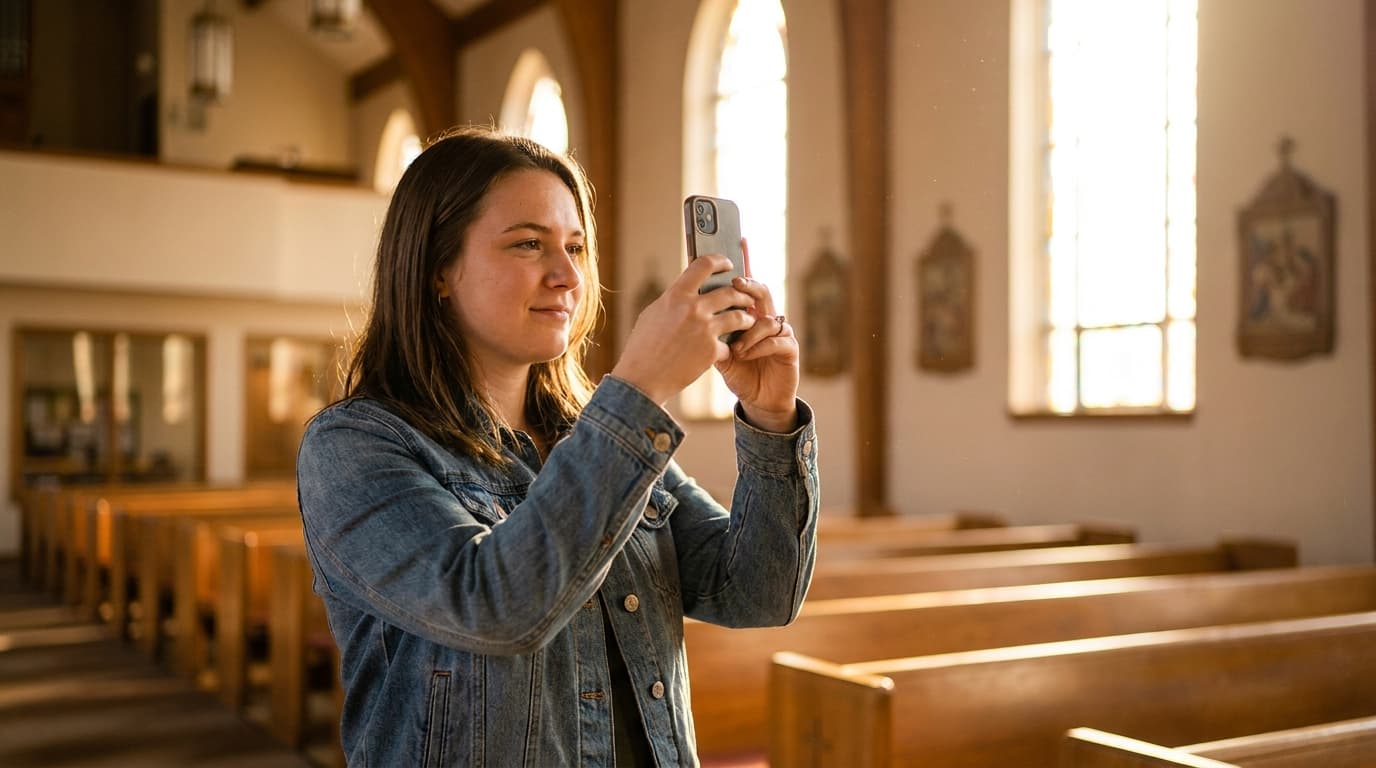
AI for church social media helps pastors and communicators create posts, captions, and content calendars in minutes, freeing them from the repetitive work that drains limited time and energy. These tools handle the drafting and scheduling so your team can focus on strategy, storytelling, and genuine community engagement — without burning out.
In 2026, the real shift isn't just speed; it's that AI can now help you maintain a consistent, theologically grounded voice across every platform, even when your communications volunteer is only available on Sundays.
The Social Media Problem Every Church Faces
It is Thursday afternoon. Your communications director — who is also your events coordinator, graphic designer, and part-time receptionist — is staring at a blank screen, trying to write Sunday's Instagram caption. The Facebook page has not posted since last week. The church TikTok account? That was a well-intentioned experiment that lasted about two weeks before life got in the way.
Meanwhile, the family who just moved to your neighborhood searched for churches on Instagram before they ever visited a website. The college student who is questioning everything scrolled your TikTok before she worked up the courage to walk through your doors. The young dad who left the church five years ago saw a Facebook post from your congregation that made him wonder if things might be different this time.
Social media is not a vanity metric for churches. It is often the front door. And for most churches, that front door is gathering dust.
Why Consistent Social Media Feels Impossible
The struggle is not laziness or incompetence. It is structural. Most churches are fighting against real constraints that make social media consistency nearly impossible without help.
Time poverty is the biggest barrier. Your communications person — if you even have one — wears four other hats. They are answering phones, coordinating volunteers, designing print materials, and troubleshooting why the projector is not working again. Social media falls to the bottom of the list every single week.
Creative fatigue is real. You can only write so many captions that say "Join us this Sunday!" before your own eyes glaze over. Coming up with fresh angles on the same weekly rhythm — worship, small groups, serve, repeat — requires creative energy that most teams simply do not have by Wednesday afternoon.
Platform fragmentation multiplies the work. Instagram wants vertical video and carousel posts. Facebook wants conversation-starting questions and event pages. TikTok wants raw, authentic, trend-aware short-form video. YouTube wants long-form with optimized titles and chapters. Each platform has its own language, its own algorithm, its own best practices. Managing even three of them well is a full-time job.
The inconsistency spiral is demoralizing. You post three times one week when energy is high, then zero times the next two weeks when life gets busy. The algorithm punishes the gaps. Engagement drops. The whole thing feels pointless. So you post less. The spiral continues.
What the Data Actually Shows
Research from the Pew Research Center consistently finds that roughly 40 percent of Americans say they discover new churches or learn about religious organizations through social media. Among adults under 40, that number climbs significantly higher.
A 2023 study by Pushpay found that 67 percent of churchgoers say their church's digital presence — including social media — influences how connected they feel to their congregation between Sundays. For new visitors, social media is now the number one pre-visit research tool, surpassing church websites for the first time.
The churches that show up consistently and authentically on social platforms are not just being trendy. They are meeting people where they already are.
How AI Actually Works for Church Social Media
When pastors hear "AI for social media," they often imagine something robotic and impersonal — generic motivational quotes overlaid on stock photos of sunsets. That is not what modern AI tools do. The best ones function more like a tireless writing assistant who understands your church's voice, your theological convictions, and your community's needs.
Here is what that looks like in practice.
Generating Post Ideas from Your Church Calendar
The most common social media bottleneck is not writing — it is ideation. Your team knows they need to post, but they cannot figure out what to say. AI eliminates this problem entirely.
You feed the tool your church calendar for the month: sermon series topics, upcoming events, volunteer appreciation week, the youth group fundraiser, the new member class starting in March. The AI generates a full content plan with specific post ideas tailored to each platform.
For example, if your sermon series is on the Book of James, the AI might suggest:
- An Instagram carousel breaking down James 1:2-4 into five practical steps for enduring trials
- A Facebook post asking your congregation to share a time when testing produced perseverance in their lives
- A TikTok script where the pastor answers the question "Does God actually want me to suffer?" in 60 seconds
- A YouTube Short featuring a 90-second devotional on faith and works from James 2
- An X thread unpacking the historical context of James' letter to the scattered church
That is five pieces of content from one sermon topic — content that would have taken your communications person an entire afternoon to brainstorm.
Writing Captions That Sound Like Your Church
Good social media captions are deceptively hard to write. They need to be short enough to read quickly, specific enough to feel personal, and compelling enough to stop someone from scrolling. AI tools trained on your church's voice can draft these in seconds.
The key is training the AI well. You provide it with examples of captions your church has written before — posts that felt like "you." You describe your tone: warm but not cheesy, theological but accessible, inviting but not desperate. The AI learns these patterns and generates drafts that sound like your team, not like a generic marketing department.
A caption draft for a baptism Sunday might look like this:
"There is nothing quite like watching someone go under the water and come up as a new creation. Yesterday, seven people publicly declared their faith in Jesus at Grace Community. Every baptism is a reminder that God is still writing stories of redemption. Welcome to the family, all of you. 💧"
Your team reviews it, tweaks a word or two, adds a real photo from the service, and posts. What used to take 20 minutes of staring at a blinking cursor now takes 3 minutes of editing.
Building Content Calendars That Actually Work
A content calendar is the difference between reactive posting and strategic communication. But building one from scratch requires time, planning, and platform knowledge that most church teams do not have.
AI tools can generate a complete 30-day content calendar in minutes. You input your church's key dates, sermon series, and ministry focuses. The AI maps out what to post, where to post it, and when — accounting for platform-specific best practices.
Here is what a single week might look like:
| Day | Platform | Content Type | Topic |
|---|---|---|---|
| Monday | Carousel | 5 takeaways from Sunday's sermon | |
| Tuesday | Question post | "What is one thing you are trusting God with this week?" | |
| Wednesday | TikTok | Short video | Pastor's 60-second midweek encouragement |
| Thursday | Instagram Stories | Behind-the-scenes | Volunteer team setting up for Sunday |
| Friday | Event promotion | Weekend service times and directions | |
| Saturday | Instagram Reel | Repurposed sermon clip | 30-second sermon highlight with captions |
| Sunday | All platforms | Photo + caption | Sunday morning worship moment |
That is a full week of content mapped out before Monday morning arrives. Your team is no longer scrambling — they are executing a plan.
Repurposing Sermon Content Across Platforms
This is where AI delivers the highest return on investment for most churches. You already invest 10-15 hours each week in sermon preparation and delivery. That single sermon contains enough content to fuel your entire social media presence for the week — if you have the tools to extract it.
AI can take a sermon transcript or outline and generate:
- 5-7 social media posts pulling out individual points, quotes, and application steps
- A blog-style summary for your website (which also helps with SEO)
- Quote graphics with the most shareable lines from the message
- A short video script for a Reel or TikTok based on the sermon's most compelling moment
- Discussion questions for small groups to use during the week
- An email newsletter summary to send to your congregation on Monday
One sermon. Ten or more pieces of content. All generated in minutes instead of hours.
Scheduling and Optimization
Many AI tools integrate directly with scheduling platforms like Later, Buffer, or Hootsuite. This means your team can batch-create an entire month of content in a single afternoon, schedule it all, and then shift their attention to engagement — responding to comments, answering DMs, and building relationships.
Some tools also analyze your past performance data and suggest optimal posting times. If your Instagram audience is most active on Tuesday evenings and Sunday mornings, the AI recommends scheduling your best content for those windows. This kind of data-driven optimization used to require a social media marketing degree. Now it is built into the tools.
Real-World Results: Three Church Case Studies
NewLife Church, Austin, Texas
NewLife Church had 1,200 Instagram followers but engagement was dropping steadily. Their communications volunteer, Sarah, was spending about six hours per week on social media — time she did not really have — and still felt behind.
After adopting an AI social media tool, the results were measurable within two months:
- Posting frequency doubled from 2 to 5 posts per week, consistently maintained
- Engagement tripled as more varied and compelling content boosted reach
- Time spent dropped by 50 percent from 6 hours to 3 hours per week
- Content variety increased with AI helping diversify into stories, quote graphics, community highlights, and short video scripts
"The AI did not replace my creativity," Sarah says. "It gave me a starting point. I used to spend 30 minutes trying to think of what to post. Now I spend 30 minutes making a good draft great."
Cornerstone Community Church, Raleigh, North Carolina
Cornerstone is a church plant with 180 members and zero paid communications staff. Pastor Marcus was personally managing the church's Facebook page, Instagram account, and YouTube channel on top of preaching, counseling, and leading a small group.
"I was drowning," Marcus admits. "I knew social media mattered, but I could not justify spending five hours a week on it when I had people in crisis who needed pastoral care."
Marcus started using AI to repurpose his sermon content. Each Monday morning, he spent 45 minutes feeding his sermon notes into the tool and reviewing the generated content. The AI produced a week's worth of posts, a blog summary, and discussion questions for his small group leaders.
Within three months, Cornerstone's Facebook reach grew by 240 percent. Their YouTube channel — which had been dormant for months — started posting weekly sermon clips that averaged 400-600 views. Two new families cited social media as how they found the church.
"The AI handles the 80 percent that used to exhaust me," Marcus says. "That frees me to add the 20 percent that makes it personal — a real photo from this morning, a genuine story about what God is doing in our community."
Harbor Light Church, Portland, Oregon
Harbor Light is a mid-sized congregation with a part-time communications coordinator named Jen. The church had strong in-person community but struggled to translate that energy online.
Jen used AI to build a content strategy around three pillars: sermon content, community stories, and practical encouragement. The AI helped her develop a consistent voice across platforms while adapting content for each one.
The turning point came when Jen used AI to create a series of Instagram Reels based on sermon illustrations. Each Reel was 30-45 seconds, captioned, and designed to stand alone as a piece of encouragement. Three of those Reels exceeded 10,000 views — more than ten times their follower count.
"Before AI, I was posting whatever I could throw together," Jen says. "Now I have a system. I know what is going out on Tuesday. I know what is going out on Friday. And the content is actually good because I am refining drafts instead of starting from nothing."
Harbor Light's Instagram following grew from 800 to 2,400 in eight months. More importantly, Jen reports that new visitor cards increasingly include the line "found you on Instagram."
Platform-Specific Strategies with AI
Each social media platform has its own culture, algorithm, and content preferences. What works beautifully on Instagram will fall flat on TikTok. What goes viral on X will barely get noticed on Facebook. AI helps you adapt your message for each platform without multiplying your workload.
Instagram: Visual Storytelling with Depth
Instagram rewards visual content with substance. AI helps churches create:
- Carousels that break down sermon points into swipeable slides — these consistently outperform single-image posts in both reach and saves
- Reels scripts that hook viewers in the first 2 seconds and deliver a complete thought in 30-60 seconds
- Caption frameworks that start with a hook, tell a micro-story, and end with a question or call to action
- Hashtag strategies that mix broad reach hashtags (#faith, #church) with local and niche tags (#AustinChurches, #ChristianParenting)
The AI can also help you develop an Instagram Stories strategy — the informal, behind-the-scenes content that builds intimacy with your audience. Think volunteer spotlights, "day in the life" content from your staff, quick poll questions about sermon topics, and countdown stickers for upcoming events.
Facebook: Community and Conversation
Facebook's algorithm prioritizes content that generates meaningful conversations. This platform is less about aesthetics and more about connection.
AI helps you write:
- Question-based posts that invite your congregation to share their experiences and thoughts
- Event descriptions that are clear, compelling, and optimized for Facebook's event discovery features
- Longer-form posts that tell stories — a testimony, a ministry update, a reflection on what God is doing in your community
- Group discussion prompts if your church uses Facebook Groups for small groups or ministry teams
Facebook is also where your older congregants are most active. AI can help you adjust your tone and content for this audience without creating a completely separate strategy.
TikTok: Authenticity and Reach
TikTok is where churches can reach people who would never search for a church on their own. The platform rewards authenticity, creativity, and trend-awareness.
AI helps you:
- Generate short-form video concepts based on trending sounds and formats, adapted for a church context
- Write attention-grabbing hooks — the first 1-3 seconds of a TikTok determine whether someone keeps watching
- Create scripts for common church content types: sermon highlights, "things pastors wish they could say," myth-busting about Christianity, day-in-the-life content
- Identify which sermon points have TikTok potential — the surprising statistic, the counterintuitive truth, the emotional moment
TikTok is not the place for polished, produced content. It is the place for your pastor talking to the camera in their office, a worship leader practicing a song, or a volunteer explaining why they serve. AI helps you plan this content so it happens consistently, not just when inspiration strikes.
YouTube: Long-Form Authority
YouTube is your church's content library. Sermons, Bible studies, and teaching content live here and get discovered through search for years.
AI optimizes your YouTube presence by:
- Writing titles that balance searchability with clickability — "What Does the Bible Actually Say About Anxiety?" outperforms "Sunday Sermon - March 15"
- Generating descriptions with timestamps, key Scripture references, and links to related content
- Creating chapter markers so viewers can navigate to specific sermon points
- Suggesting thumbnail text that is readable at small sizes and creates curiosity
- Writing Shorts scripts pulled from sermon highlights to drive traffic to full-length content
X (Formerly Twitter): Thought Leadership and Dialogue
X works well for pastors and church leaders who want to engage in broader cultural and theological conversations. AI helps you:
- Craft concise tweets that distill sermon points into 280-character insights
- Generate thread ideas that unpack a theological concept across 5-10 connected tweets
- Create engaging questions that spark discussion among your followers
- Repurpose quotes from your sermons, books you are reading, or conversations with your team
Building Your AI-Powered Content Calendar: A Four-Week System
The difference between churches that thrive on social media and churches that struggle is not talent or budget. It is systems. Here is a practical four-week rhythm that any church can implement.
Week 1: Plan Your Themes
Sit down with your church calendar and map out your content themes for the month. Most churches benefit from organizing around five content pillars:
- Sermon content — previews, highlights, quotes, and applications from Sunday messages
- Community stories — testimonies, volunteer spotlights, member milestones, and ministry updates
- Event promotion — upcoming gatherings, classes, serving opportunities, and registration links
- Devotional content — Scripture reflections, prayer prompts, and spiritual encouragement
- Behind-the-scenes — the human side of your church: setup, staff life, funny moments, and real life
Feed these themes and your calendar into your AI tool. Let it generate a full month of post ideas, organized by platform and date. Review the plan, adjust anything that does not fit, and lock it in.
Week 2: Create Your Content
This is your batch-creation week. Set aside 2-3 hours — ideally on a Monday or Tuesday — and use AI to draft all of your captions, scripts, and descriptions for the month. Design or source your graphics. Record any video content you need.
The goal is to have 80 percent of your month's content created and scheduled by the end of this week. You are not posting it all yet — you are preparing it.
Week 3: Engage and Adjust
Content is posted. Now your focus shifts to engagement. Respond to every comment and DM within 24 hours. Ask follow-up questions. Share user-generated content. This is where social media becomes relational rather than transactional.
Watch your analytics. Did that carousel outperform the quote graphic? Did the question-based Facebook post generate more comments than the announcement post? Take notes. These insights shape next month's strategy.
Week 4: Plan Ahead
Use the last week of the month to plan the next month. Pull up your analytics. Identify your top-performing content types. Feed that data back into your AI tool so it can generate an even better content plan for the month ahead.
This cycle — plan, create, engage, evaluate — is sustainable. It does not require heroic effort. It requires a system and the right tools.
Practical Tips for Getting the Most from AI
Keep Your Voice Front and Center
AI generates drafts, not final products. Every piece of content should go through a human filter before it goes live. Read it out loud. Does it sound like your church? Would your pastor actually say it this way? Does it reflect your theological convictions and community culture?
The best workflow is: AI drafts, human edits, team approves. The AI handles the heavy lifting of structure and ideation. Your team adds the soul.
Do Not Over-Automate
There is a temptation, once you see how fast AI can produce content, to automate everything and disengage. Resist this. Social media is social. The posts are the invitation. The conversations in the comments are the ministry.
Use AI to create more content in less time. Then invest the time you saved into actually engaging with the people who respond. A thoughtful reply to a comment does more for your church's online presence than a dozen perfectly crafted posts.
Mix Content Types Relentlessly
The algorithm — and your audience — rewards variety. Do not post the same type of content five times in a row. Rotate between:
- Static images with compelling captions
- Carousels with educational or inspirational content
- Short-form video (Reels, TikToks, Shorts)
- Stories with polls, questions, and behind-the-scenes moments
- Text-based posts that invite conversation
- Live video for real-time connection
AI can help you plan this variety intentionally rather than defaulting to whatever feels easiest in the moment.
Be Consistent Above All Else
Posting three times one week and zero times the next trains your audience to ignore you. Posting four times every week — even if some posts are simpler — builds trust and expectation.
Consistency is more important than perfection. A good post published on Tuesday beats a perfect post that never gets finished. AI makes consistency achievable by reducing the effort required to show up.
Measure What Actually Matters
Vanity metrics — likes and follower counts — feel good but tell you little. Focus on metrics that indicate genuine engagement:
- Saves — people bookmarking your content to return to later
- Shares — people sending your posts to friends or putting them in their Stories
- Comments — real conversation, not just emoji reactions
- DMs — people reaching out privately with questions or prayer requests
- Link clicks — people visiting your website, signing up for events, or watching full sermons
- Profile visits — people checking out your church after seeing your content
These metrics tell you whether your social media presence is actually connecting with people or just filling a feed.
Common Mistakes Churches Make with AI Social Media
Posting Without Reviewing
This is the number one mistake. AI is a tool, not an autopilot. Every draft needs human review for accuracy, tone, theological alignment, and cultural sensitivity. An AI might generate a caption that sounds fine theologically but does not match your church's specific convictions on a particular issue. It might suggest a joke that falls flat in your community context. Always review before posting.
Ignoring Platform Differences
A caption that works on Instagram will not work on TikTok. A video that thrives on Reels needs reformatting for YouTube Shorts. AI can help you adapt content across platforms, but you need to actually use that capability rather than copy-pasting the same text everywhere.
Forgetting the Call to Action
Every post should have a purpose. What do you want the person who sees this post to do? Visit your website? Register for an event? Share their story in the comments? Show up on Sunday? Without a clear call to action, even great content just floats by.
AI can help you craft calls to action that feel natural rather than salesy. "What has God been teaching you this week? Drop it in the comments — we would love to hear from you" is a call to action. It is also an invitation to community.
Neglecting the Engagement Side
Creating content is only half the equation. Responding to comments, answering DMs, engaging with other accounts in your community, and showing up in the comments section of local businesses and organizations — this is the relational work that turns followers into visitors and visitors into members.
AI cannot do this part for you. But by freeing up the time you used to spend on content creation, AI gives you the margin to invest in the engagement that actually builds community.
Treating AI as a Replacement for Strategy
AI is a tactical tool. It executes tasks brilliantly. But it does not know your church's mission, your community's needs, or your ministry goals. You still need a human brain — and ideally a small team — setting the strategy: Who are we trying to reach? What do we want them to know? How does social media serve our larger mission?
AI makes the strategy executable. It does not replace the strategy itself.
Getting Started This Week
If you are new to AI for church social media, start small and build momentum.
Day 1: Choose one AI tool and create an account. Feed it some basic information about your church — your name, location, denomination or tradition, typical congregation size, and the tone you aim for.
Day 2: Take your upcoming sermon topic and ask the AI to generate five social media post ideas across different platforms. Review them. Edit them. See how it feels.
Day 3: Pick one platform — whichever one your church is most active on — and use AI to draft a full week of content. Schedule it if you can.
Day 4-7: Post the content. Engage with every response. Take notes on what feels right and what needs adjustment.
Week 2: Expand to a second platform. Build your first full content calendar for the month.
Month 2: Evaluate what worked. Refine your voice. Expand your content types. Start repurposing sermon content systematically.
Within 60 days, you will have a sustainable system that keeps your church visible, connected, and engaging on social media — without burning out your team.
Related reading
- AI Volunteer Recap Email Generator for Churches
- AI Discipleship Content for Churches
- AI Easter Sermon Planning
Write Sermons Free: 200 Per Month on AlignedAI
Pastors can draft up to 200 sermons per month at no cost on AlignedAI. Each outline, manuscript draft, illustration set, or prep request counts as one message on the free tier — enough for weekly preaching plus Bible studies and church communications.
Sign up free at aligned.church →
No credit card required. Configure your theological tradition, Bible translation, and church context during setup.
Frequently Asked Questions
Will AI-generated social media content sound robotic or generic?
Not if you use it well. AI generates drafts that you refine with your church's voice, stories, and personality. The tool provides structure and speed. Your team provides soul and specificity. Think of it as a first-draft assistant, not a finished-product machine. Churches that review and edit AI drafts consistently produce content that feels personal and authentic.
How much does AI social media software cost for a church?
Pricing varies widely. Some tools offer free tiers with basic functionality, while comprehensive platforms range from $15 to $100 per month. Many churches find that the time savings alone — reclaiming 5-10 hours per week of staff or volunteer time — makes even paid tools a strong investment. Start with a free trial to see if the workflow fits your team before committing to a paid plan.
Can AI help with social media for churches with very small teams or no communications staff?
Absolutely. This is actually where AI delivers the most dramatic impact. Churches with volunteer-only communications teams or pastors managing social media themselves benefit enormously because AI eliminates the blank-page problem and the time-intensive work of drafting content from scratch. A pastor can generate a week of content in 30 minutes on Monday morning and have it scheduled before their first meeting.
Is it ethical for churches to use AI for social media content?
Using AI as a drafting and planning tool is no different from using a template, a content calendar app, or a graphic design platform. The ethical responsibility remains the same: ensure the content is truthful, theologically sound, and genuinely representative of your church community. AI helps you create content more efficiently. Your team remains responsible for the accuracy, integrity, and pastoral sensitivity of everything you publish.
How do I train AI to match our church's specific voice and theology?
Most AI tools allow you to provide context through system prompts, style guides, or example content. Share 5-10 examples of posts your church has written that felt like "you." Describe your tone in plain language — "warm but not cheesy, theologically grounded but accessible, inviting but not pushy." Specify your denomination, your doctrinal positions on key issues, and the Bible translation you prefer. The more context you provide, the better the AI's drafts will match your voice from the start.
Frequently asked questions
How can AI help my church with social media?
AI tools generate post ideas, write captions, build content calendars, repurpose sermon content, and suggest optimal posting times. This saves your team hours each week.
Will AI-generated posts sound robotic?
Not if you use AI correctly. Think of AI output as a first draft. You review, adjust tone, add personal touches to match your church voice.
Which platforms should our church be on?
It depends on your community. Facebook reaches older demographics. Instagram is for visual storytelling. TikTok reaches younger audiences. YouTube is essential for sermon content.
How much time can AI save on church social media?
Most churches report saving 50-70% of the time previously spent on social media content creation.
Can AI help with social media strategy?
Yes. Many AI tools analyze engagement data and suggest content strategies, optimal posting times, and content types that resonate with your audience.
How do we keep our church voice consistent with AI?
Create a style guide defining your church tone, language preferences, and content themes. Use it as a prompt when working with AI.
Should we use AI for responding to comments?
AI can draft responses, but personal engagement matters. Use AI for drafts, then add personal touches before responding.
How often should our church post on social media?
Consistency matters more than frequency. Aim for 3-5 posts per week on your primary platform.
Can AI help create graphics and visual content?
Some AI tools generate graphics. Pair AI caption writing with design tools like Canva for visual content.
What is the first step to using AI for social media?
Audit your current social media. Then pick one AI tool and generate a week of content for your strongest platform. See the difference and expand.
About this article
Published by Aligned Team, the doctrine-aware AI platform built for pastors and church leaders. Every article is grounded in Scripture and aligned to historic Christian doctrine.
Reviewed against the same doctrinal frameworks that power AlignedAI. See our editorial standards.
Published June 5, 2026. Last updated June 24, 2026.
Spotted an error or a claim that needs a source? Email our support team — we update the article and its date when a correction is warranted.
Comments
- No comments yet. Be the first to share your thoughts.