AI Volunteer Onboarding Generator for Churches
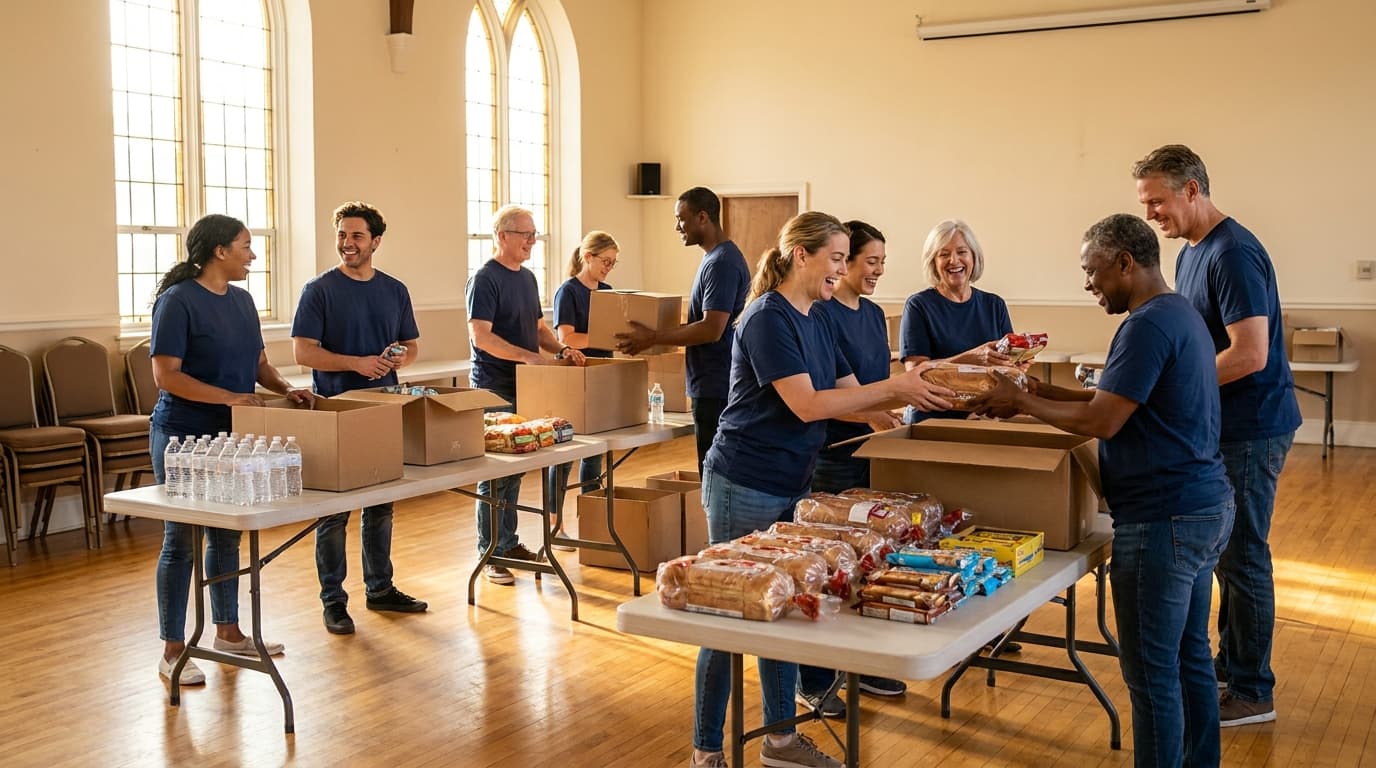
A volunteer signs up with excitement on Sunday morning, then hears nothing for two weeks. By the time someone reaches out, their enthusiasm has cooled and they quietly disappear. AI-powered onboarding systems solve this by helping churches generate professional, consistent welcome guides, training documents, role descriptions, and orientation checklists that capture volunteer enthusiasm from day one and channel it into confident, effective service.
The Two-Week Silent Treatment
You know the moment. After the service, a young couple fills out a connection card and checks the box for children ministry. They smile as they hand it to you. They are genuinely excited. They want to serve.
Then they wait. And wait. By the time someone calls them two weeks later, they have forgotten they signed up, or committed to something else, or lost the emotional momentum. Oh right, they say. We will get back to you. They never do.
This scenario is so common that most churches accept it as normal. But it is actually one of the most solvable problems in ministry. The issue is not a lack of willing volunteers. The issue is a broken onboarding process that fails to capture momentum.
The Real Cost of Poor Onboarding
Let us quantify what poor volunteer onboarding actually costs your church: volunteer attrition (volunteers who do not receive structured onboarding within two weeks are 60 percent less likely to ever serve), staff time wasted, ministry gaps, cultural damage (when volunteers feel ignored, word spreads), and lost potential (every volunteer who slips away represents a relationship that never deepened).
Good onboarding is not just an administrative nicety. It is a ministry strategy.
What Is AI Volunteer Onboarding?
AI volunteer onboarding uses artificial intelligence to automate and personalize the process of turning a willing newcomer into a confident, equipped volunteer. Think of it as a digital onboarding assistant that works 24/7, never forgets a step, and tailors every interaction to the specific role and individual.
The Core Components of an AI-Powered Onboarding System
A complete AI onboarding system handles five key functions: document generation (welcome packets, role descriptions, training guides, FAQs), personalized communication (role-specific welcome emails, training reminders, check-ins), training content creation (role-appropriate training materials from nursery safety to worship team expectations), progress tracking (monitors each volunteer journey and flags anyone who gets stuck), and orientation scheduling (integrates with your calendar).
How AI Transforms Each Onboarding Phase
Phase 1: Immediate Acknowledgment (Within Minutes)
The old way: a connection card sits in a stack until Monday. The AI way: the moment a volunteer submits their information, they receive an instant text message, a personalized email within the hour with a welcome and a single clear next step, and a calendar link for scheduling orientation.
Phase 2: Welcome and Information (Day 1-3)
The AI generates a role description specifically for their position (not a generic volunteer description, but a detailed breakdown of what a nursery worker does), a welcome guide tailored to their ministry area, and an FAQ document answering role-specific questions.
Phase 3: Orientation and Training (Day 3-7)
The orientation is role-specific, interactive, and efficient. Training materials are generated for the specific role in digestible formats with knowledge checks.
Phase 4: First Serve and Shadowing (Day 7-14)
The volunteer is paired with an experienced mentor. The mentor receives a briefing. A post-serve check-in is scheduled within 24 hours.
Phase 5: Integration and Ongoing Development (Day 14+)
Regular check-ins at 30, 60, and 90 days. Feedback loops. Development pathways based on the volunteer interests and performance.
Real-World Impact
Case Study: New Life Community Church, Phoenix
New Life was losing volunteers at an alarming rate. Of 120 people who signed up to volunteer in a typical year, only 45 completed onboarding. After implementing AI-powered onboarding: completion rate jumped from 37% to 78%, time-to-first-serve dropped from 3 weeks to 5 days, satisfaction increased from 3.1 to 4.5 out of 5, and annual retention improved by 40%.
The AI does not replace the human element, says coordinator Jen Martinez. It handles the logistics so I can focus on relationships.
What AI Onboarding Documents Look Like
The AI generates nursery volunteer welcome guides with role descriptions, typical Sunday schedules, what to wear, and key policies (two-adult rule, diaper change protocol, allergy alerts). It generates worship team role descriptions with expectations, values, and what they look for in team members.
Addressing Common Concerns
Will this feel impersonal? Not if done right. AI handles logistics and creates space for deeper personal connection. What if volunteers do not use technology? The system offers email, text, and printable PDFs. Is it worth the cost? Most AI onboarding tools pay for themselves within months.
Getting Started: A 30-Day Plan
Week 1: Audit and map your current process, identify gaps, document policies. Week 2: Generate and customize role descriptions, welcome guides, training materials. Week 3: Set up automation sequences, scheduling integration, feedback loops. Week 4: Launch, monitor completion rates, gather feedback, refine.
The Heart of Volunteer Onboarding
Behind every connection card checked interested in serving is a person made in the image of God, with gifts and passions and a desire to be part of something bigger. When we let their enthusiasm cool through poor onboarding, we are not just losing a volunteer. We are missing an opportunity to help someone discover and deploy their God-given gifts.
Related reading
- AI Volunteer Scheduling for Churches
- Best AI Church Data Tools
- Best AI Tools for Church Operations Teams in 2026
Frequently Asked Questions
How long does it take to set up? Most churches complete initial setup in one to two weeks. Can it work for small churches? Absolutely, small churches often benefit the most. What if we already have training materials? Use them as input for the AI. How do we handle background checks? AI onboarding integrates with background check services automatically.
Frequently asked questions
What is volunteer onboarding for churches?
Volunteer onboarding is the process of integrating new volunteers into your church's ministry teams. It includes application, screening, orientation, training, shadowing, and deployment.
How does AI help with volunteer onboarding?
AI generates onboarding materials including welcome guides, role descriptions, training documents, checklists, and onboarding emails. These materials ensure consistent preparation for every new volunteer.
What should a volunteer welcome guide include?
Church mission and values, volunteer expectations, practical information, safety policies, communication guidelines, and contact information for the volunteer coordinator.
How long should the volunteer onboarding process take?
For most roles, 2-4 weeks from initial sign-up to first solo assignment. This includes application, screening, orientation training, and a supervised shadowing period.
Do all volunteer roles need the same onboarding?
Basic orientation is the same for everyone. Role-specific training varies by position. A greeter needs different training than a nursery worker or tech team operator.
What is a volunteer role description?
A document that outlines a role's responsibilities, time commitment, required skills, reporting structure, and success metrics. It sets clear expectations for both the volunteer and the ministry leader.
How do I track volunteer onboarding progress?
Use an onboarding checklist that tracks each volunteer's progress: application submitted, background check completed, orientation attended, training completed, and first assignment scheduled.
Should volunteers complete a background check?
Anyone working with children, youth, or vulnerable adults should complete a background check. Many churches require background checks for all volunteers as a best practice.
How do I onboard volunteers at scale?
Use standardized AI-generated materials, automated communication workflows, group orientation sessions, and a tracking system.
What is a shadowing period in volunteer onboarding?
A period when a new volunteer observes and assists an experienced volunteer before serving independently. It typically lasts 1-2 service opportunities.
About this article
Published by Aligned Team, the doctrine-aware AI platform built for pastors and church leaders. Every article is grounded in Scripture and aligned to historic Christian doctrine.
Reviewed against the same doctrinal frameworks that power AlignedAI. See our editorial standards.
Published June 5, 2026. Last updated June 19, 2026.
Spotted an error or a claim that needs a source? Email our support team — we update the article and its date when a correction is warranted.
Comments
- No comments yet. Be the first to share your thoughts.