Can AI Understand My Church's Doctrine? What It Can and Can't Do
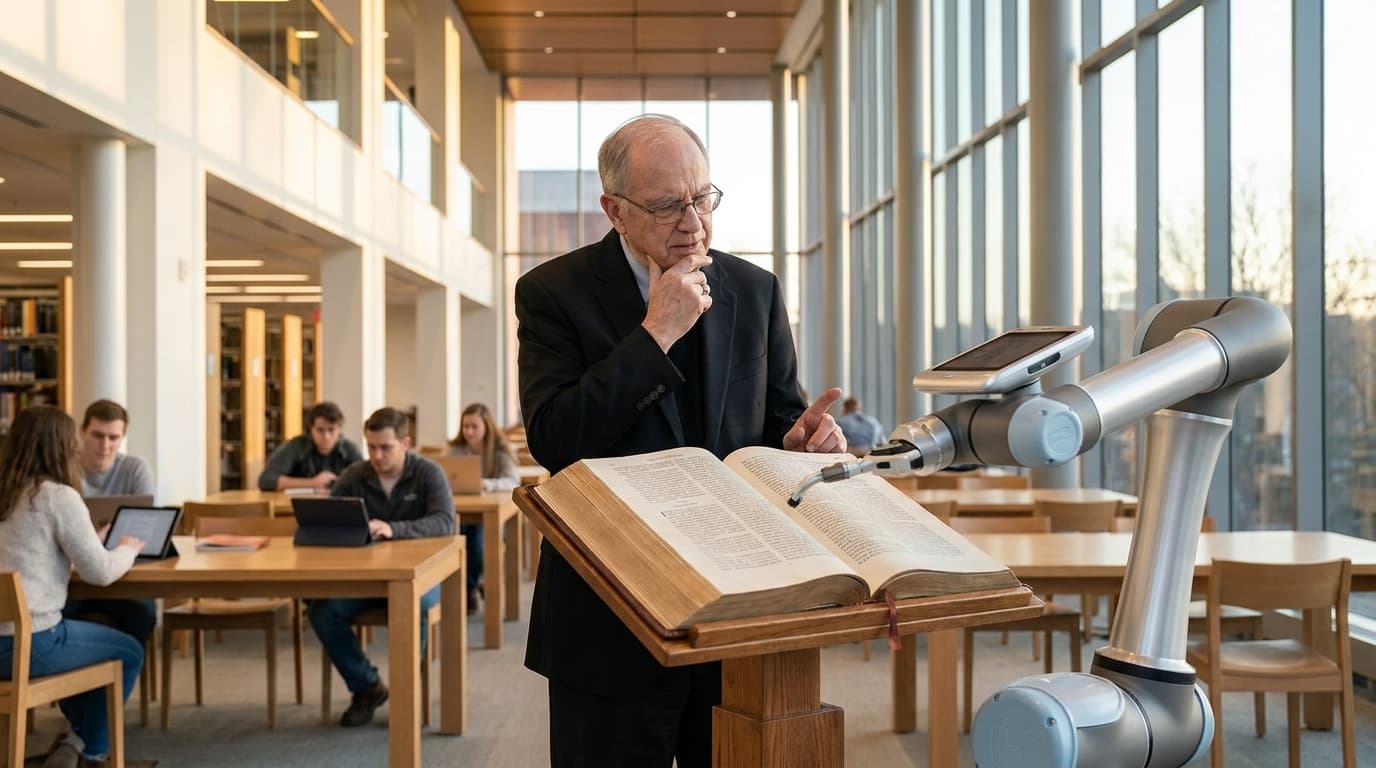
AI can understand church doctrine at a structural level — identifying positions, applying them consistently, and generating aligned content. But AI cannot grasp the spiritual depth, pastoral wisdom, and experiential reality behind those doctrines. Aligned uses your doctrine as a filter while respecting the limits of what AI can and cannot do.
What AI Can Do with Doctrine
Identify Doctrinal Positions
AI excels at parsing textual information. When you upload your statement of faith, the AI can identify and categorize your positions on key doctrines. It understands that "We believe in believer's baptism by immersion" means something specific and different from "We practice infant baptism as a sign of the covenant."
This identification capability is the foundation of doctrine-aware AI. The AI does not need to understand why you believe what you believe. It needs to know what you believe so it can generate content consistent with those beliefs.
Apply Doctrine Consistently
Once the AI knows your doctrinal positions, it can apply them consistently across all content generation. A sermon outline on baptism will reflect your baptismal theology. A Bible study on election will reflect your soteriology. A newsletter on the church will reflect your ecclesiology.
This consistency is one of AI's greatest strengths. Humans are inconsistent. We forget what we said last month. We unconsciously drift toward the most recent theology book we read. AI applies the same doctrinal filter every time, maintaining consistency across hundreds of pieces of content.
Generate Doctrinally Aligned Content
AI can generate content that is pre-filtered through your doctrinal framework:
Sermon outlines that derive from the text while applying your interpretive lens.
Bible study questions that reflect your hermeneutical approach.
Application points consistent with your understanding of the Christian life.
Communications that use your doctrinal vocabulary and emphasis.
Learn Doctrine from Sermons
By analyzing your sermon archive, AI can identify doctrinal positions that may not be explicitly stated in your statement of faith. The AI learns from your preaching patterns: the passages you emphasize, the theologians you reference, the applications you make, and the positions you take on debated issues.
What AI Cannot Do with Doctrine
Experience Spiritual Reality
AI can write about justification by faith. It cannot experience the liberation of knowing that your sins are forgiven. AI can describe the work of the Holy Spirit. It cannot feel the Spirit's conviction or comfort. AI can explain prayer. It cannot pray.
Doctrines are not just intellectual propositions. They are descriptions of spiritual realities that are experienced by believers through faith. AI operates at the level of information, not transformation.
Exercise Pastoral Discernment
When a congregant asks about a difficult doctrine, the pastor does not just recite a position. The pastor reads the person's spiritual state, considers their background, and tailors the response to their specific situation. This requires wisdom, empathy, and spiritual discernment that AI does not possess.
Example: A grieving mother asks, "Is my child in heaven?" The pastor's response requires more than a doctrinal statement about the age of accountability. It requires compassion, sensitivity, and wisdom that comes from the Holy Spirit, not from a language model.
Navigate Theological Tensions
Many doctrines involve healthy tensions that cannot be fully resolved in systematic categories. The sovereignty of God and human responsibility. The already and the not yet. The holiness of God and His nearness to sinners. These tensions are features of biblical theology, not bugs to be fixed.
AI tends to resolve tensions toward one side or the other, depending on its training data and configuration. A pastor navigates these tensions with nuance, holding both sides in appropriate balance.
Provide Spiritual Authority
When a pastor preaches, the congregation receives more than information. They receive the word of a person who has wrestled with the text, prayed through the message, and speaks from personal conviction. This spiritual authority comes from the pastor's relationship with God and their congregation, not from the content's intellectual quality.
AI-generated content, even when theologically accurate, lacks this spiritual authority. The pastor must engage personally with every piece of content before it carries the weight of pastoral authority.
The Right Framework: AI as Theological Assistant
The correct framework for AI and doctrine is assistant, not authority. AI assists the pastor's theological work:
Research assistant. AI gathers information, identifies patterns, and organizes material.
Consistency checker. AI flags potential doctrinal inconsistencies in content.
Content generator. AI creates first drafts that the pastor edits and personalizes.
Archive keeper. AI indexes and makes searchable the church's teaching history.
The pastor remains the theological authority:
Final interpreter. The pastor makes the final interpretive decision on every text and every doctrine.
Pastoral applicator. The pastor applies doctrine to specific people in specific situations.
Spiritual discerner. The pastor discerns what the congregation needs to hear and how to say it.
Conviction carrier. The pastor preaches from genuine conviction, not from AI output.
Practical Implications
Configure, Then Verify
Configure your doctrinal framework thoroughly in Aligned, then verify the AI's output on every sermon. Over time, as the AI learns your theology, the verification becomes quicker and easier.
Use AI for Research, Not Decisions
Use AI to research doctrinal questions, gather relevant Scripture passages, and understand different positions. Make the theological decisions yourself.
Maintain Personal Study
Do not let AI replace your personal engagement with Scripture. The pastor who studies the text personally preaches with conviction. The pastor who relies entirely on AI preaches without authority.
Test on Sensitive Passages
Periodically test the AI on theologically sensitive passages to calibrate its accuracy. If the AI handles Romans 9 or Revelation 20 in a way that aligns with your convictions, it is more likely to be reliable on other passages.
AI can understand your doctrine well enough to be a useful assistant. It cannot understand your doctrine well enough to replace you. Use it accordingly.
Write Sermons Free: 200 Per Month on AlignedAI
Pastors can draft up to 200 sermons per month at no cost on AlignedAI. Each outline, manuscript draft, illustration set, or prep request counts as one message on the free tier — enough for weekly preaching plus Bible studies and church communications.
Sign up free at aligned.church →
No credit card required. Configure your theological tradition, Bible translation, and church context during setup.
Related reading
Frequently asked questions
Can AI truly understand church doctrine?
AI can understand doctrine at a structural and textual level: it can identify doctrinal positions, apply them consistently, and generate content aligned with them. However, AI cannot grasp the spiritual depth, pastoral wisdom, or experiential reality behind those doctrines.
What is the difference between AI understanding and applying doctrine?
AI applies doctrine by pattern matching and rule-following. True understanding involves conviction, experience, and spiritual discernment that only humans possess.
Can AI make theological errors?
Yes. AI can oversimplify complex doctrines, miss contextual nuances, blend incompatible positions, or generate content that is technically correct but pastorally inappropriate.
Should I trust AI with theological content?
Trust but verify. Use AI as a theological research assistant that accelerates your work, but always exercise pastoral discernment over the final content.
Can AI handle denominational differences?
AI can apply denominational positions when explicitly configured. However, it may struggle with subtle distinctions between similar traditions without detailed doctrinal configuration.
Does AI understand the difference between essential and secondary doctrines?
AI can be configured to distinguish between essential doctrines (like the Trinity and the resurrection) and secondary issues (like baptismal mode and eschatological timelines).
Can AI handle controversial theological topics?
AI can present the major positions on controversial topics, but the pastor must make the final decision about how to address these topics from the pulpit.
Is AI better at some doctrines than others?
AI tends to be better at doctrines that are clearly defined and widely documented. It may struggle with doctrines that are highly nuanced, experiential, or debated within a tradition.
Can AI learn doctrine from sermons?
Yes. By analyzing your sermon archive, AI can identify your doctrinal positions, theological emphases, and interpretive approach. This improves over time.
What should pastors never trust AI to do with doctrine?
Pastors should never trust AI to make final theological decisions, handle pastoral counseling on doctrinal issues, or replace personal engagement with Scripture and prayer.
About this article
Published by Aligned Team, the doctrine-aware AI platform built for pastors and church leaders. Every article is grounded in Scripture and aligned to historic Christian doctrine.
Reviewed against the same doctrinal frameworks that power AlignedAI. See our editorial standards.
Published June 5, 2026. Last updated June 19, 2026.
Spotted an error or a claim that needs a source? Email our support team — we update the article and its date when a correction is warranted.
Comments
- No comments yet. Be the first to share your thoughts.